Article Summary
Choosing the right glass shower door comes down to three decisions: how it opens, how much frame (if any) you want visible, and what finish of glass fits your bathroom. Get those right and a shower door can make a small bathroom feel larger and a large one feel custom-designed. In this guide, we break down the main types of glass shower doors we install across Miami, so you know what to ask for before you request a quote.
By Frame: Frameless, Semi-Frameless, or Framed
This is usually the first decision homeowners make, since it drives both the look and the price.
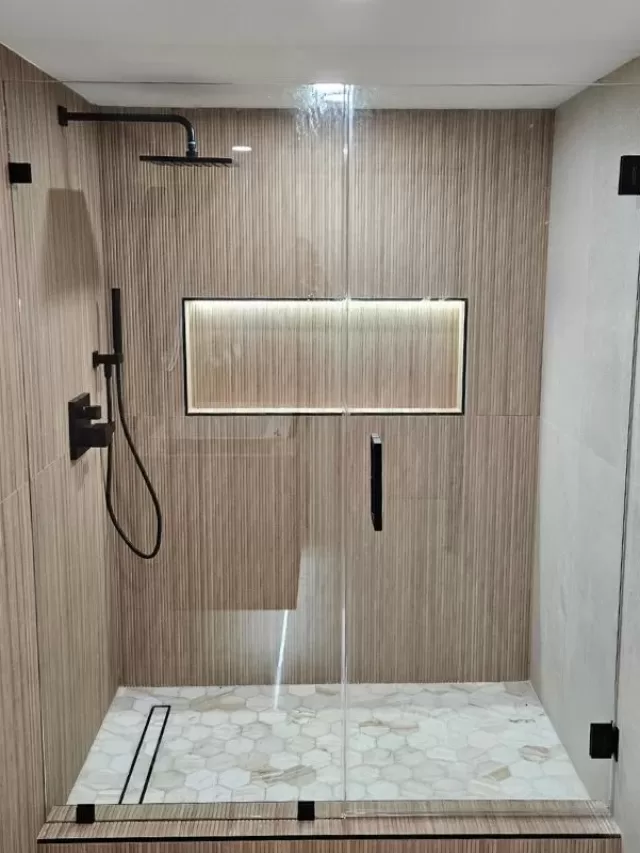
- Frameless doors: Thick tempered glass (typically 3/8″ to 1/2″) held by minimal hardware, with no metal border around the panels. This is the most requested style today — it reads as clean and modern, and it’s the easiest to keep clean since there’s no metal channel to collect mold or hard water. See our frameless shower doors in Miami for examples and pricing.
- Semi-frameless doors: A slim metal frame around the door itself, but little or no framing on the fixed panels. A middle ground between cost and the frameless look.
- Framed doors: Full metal framing around every panel. The most budget-friendly option, and still a solid choice for rentals or simple bathroom updates.
By Opening Style: Sliding, Hinged, and Fixed Panels
How the door opens depends mostly on how much floor space you have in front of the shower.
- Sliding doors: Two or more panels glide on a track, so the door never swings into the bathroom. Ideal for tighter layouts. We also install trackless sliding doors, which skip the bottom track for easier cleaning. Full details on our sliding shower glass door page.
- Hinged (swinging) doors: A single panel that swings open like a regular door. This is the standard choice for frameless installations and needs enough clearance to swing outward.
- Fixed panels & enclosures: For walk-in or doorless showers, a fixed glass panel alone can contain the water without any moving parts at all. Popular for larger shower enclosures and curbless designs.
By Glass Finish: Clear, Frosted, Textured, and Tinted
The glass itself changes both privacy and how light moves through the room.
- Clear glass: The most common choice, and the one that makes a bathroom feel largest. Often specified in “low-iron” or “ultra-clear” glass, which removes the slight green tint standard glass has along its edges.
- Frosted / acid-etched glass: Fully or partially opaque for privacy, while still letting light through. A popular option for shared bathrooms or ground-floor windows nearby.
- Textured (rain or reeded) glass: Adds a decorative pattern that also hides water spots and soap residue between cleanings — a practical pick for busy households.
- Tinted glass: Grey or bronze tints pair well with darker hardware and tile, and add a subtle design accent without sacrificing much visibility.
Which Type Is Right for Your Bathroom?
As a starting point: tight bathrooms usually do best with a sliding or trackless door to avoid swing clearance issues; walk-in showers with generous space look best with a single frameless fixed panel; and multi-use or family bathrooms benefit from frosted or textured glass for privacy. Thickness matters too — 1/2″ glass feels sturdier and needs less hardware than 3/8″, but is heavier and costs more.
Every bathroom is a different shape, so the fastest way to know what fits is a free, no-obligation measurement.
Custom Glass Shower Doors in Miami
At Unlimited Shower Glass, every door is custom-measured and fabricated for the bathroom it’s going into — no stock sizes. Whether you want a frameless walk-in enclosure, a space-saving sliding door, or a textured-glass door for privacy, our installers can walk you through the options in person. Explore our bathroom glass installation services or request a free quote to get started.